Toronto · City guideGuide de ville · ON
Toronto: the full pictureToronto : le portrait complet
Toronto is Canada's money and head-office town: the five big banks, the two big life insurers, the stock exchange and three of the country's largest pension funds are all run from a few blocks downtown, and finance, insurance and real estate alone employ about 455,000 people in the metro. Around that core sits the largest professional-services, tech and health-research workforce in the country, a 47-million-passenger airport, a film industry doing about $2 billion a year, and a manufacturing belt in the outer suburbs that is now exposed to US tariffs. The region added almost no population in 2025 after a decade of fast growth, unemployment spiked to 9% in mid-2025 before easing, and condo construction has fallen by roughly a third.
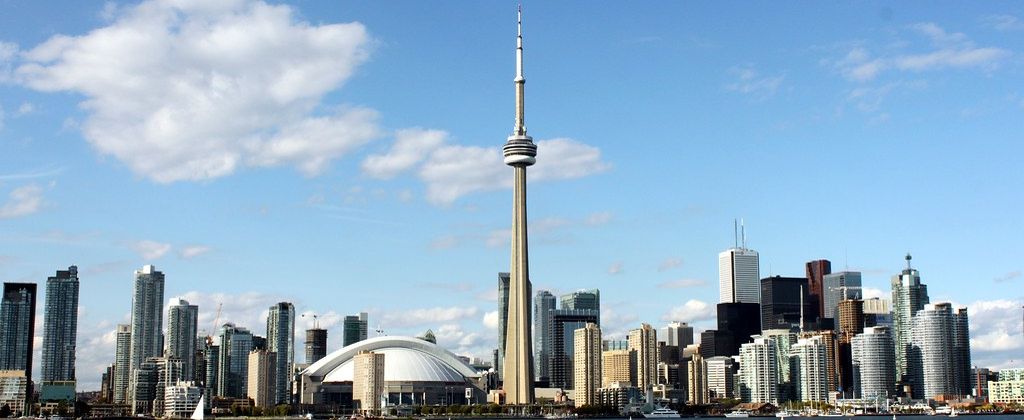
01Scale
The Toronto census metropolitan area had 7,108,874 residents on July 1, 2025, essentially flat on 2024 (7,109,866) after growing by roughly 270,000 the year before. The labour force averaged 4.09 million in 2025 with 3.74 million employed; the annual unemployment rate was 8.6%, up from 8.0% in 2024 and 6.3% in 2023. Statistics Canada's most recent metro GDP figure puts Toronto at $522.4 billion at basic prices for 2022, the largest of any Canadian CMA.
02The labour market has been rough, and is now healing
Toronto's unemployment rate hit a recent high of 9.0% in July 2025 and was 6.7% in August 2026, still above the national 6.4% but well down over the year. Youth (15-24) unemployment in the metro averaged 18.0% in 2025, against 7.3% for adults 25 and over. Employment in 2025 still grew by about 67,000 to 3.74 million, but the labour force grew faster, which is why the rate rose.
03What people actually do
Of 3.74 million employed in 2025, professional, scientific and technical services was the largest industry at 536,600, followed by wholesale and retail trade (509,200), finance, insurance and real estate (455,000), health care and social assistance (405,000) and manufacturing (347,100). The goods-producing sector is only 590,200 jobs (16%); construction is 212,200 and transportation and warehousing 227,400. Year over year, finance (+12,200), professional services (+10,700), information/culture/recreation (+16,800) and accommodation/food (+16,100) grew, while business support services (-4,600), education (-1,200) and health care (-3,600) slipped.
04Finance: the exchange, the banks, the pensions
Toronto Stock Exchange listed 2,272 issuers with a combined market capitalization of C$7.25 trillion at August 31, 2026 (3,768 issuers and C$7.40 trillion including TSX Venture), and issuers raised C$27.0 billion in equity in the first eight months of 2026, up 82% on the same period of 2025. Toronto Global counts about 10,000 financial-services businesses employing over 270,000 people in the region, with all five big banks and 41 international banks' Canadian head offices here. Three of the world's largest pension investors are also run from Toronto: CPP Investments (C$863.6 billion at June 30, 2026), Ontario Teachers' (C$303.2 billion) and OMERS (C$151.6 billion).
- TSX/TSXV Market Intelligence Group, The MiG Report, August 2026 · August 31, 2026
- Toronto Global, Financial Services · employment figure sourced to Lightcast 2022
- CPP Investments Net Assets Total $863.6 Billion at First Quarter Fiscal 2027 · June 30, 2026
- Ontario Teachers' Pension Plan home page · June 30, 2026
- About OMERS · June 30, 2026
05Venture capital
Toronto was Canada's leading VC city in the first half of 2026 with $880 million invested across 64 deals, ahead of Montreal ($619 million, 50 deals); Ontario took $1.12 billion, 42% of the national $2.69 billion. Nationally, 2025 was a down year ($8.0 billion across 571 deals, dollars down 6%, deal count down 12%) with no IPOs, and Ontario represented just over half of dollars. The pattern CVCA flags is thin domestic growth-stage capital: foreign investors took part in 56% of later-stage rounds in H1 2026, up from 30% a year earlier.
06Tech, AI and life sciences
Toronto Global cites CBRE's 2023 tech-talent scoring for a tech workforce of over 285,000, the third-largest pool in North America after the Bay Area and New York; Statistics Canada's broader professional/scientific/technical category was 536,600 jobs in 2025. The anchor AI companies are Cohere (Toronto-headquartered, US$500 million round at a US$6.8 billion valuation in August 2025) and the Vector Institute. The life-sciences cluster is the Discovery District around University Avenue: Toronto Global counts more than 1,400 life-sciences establishments in the region, 37 research institutes and nine teaching hospitals, though CVCA data shows national life-sciences VC fell 39% in H1 2026 to its lowest first-half on record.
- Toronto Global, Technology · CBRE Scoring Tech Talent 2023
- Toronto Global, Life Sciences · undated page, fetched Sept 2026
- TechCrunch: Cohere hits a $6.8B valuation · August 14, 2025
- CVCA H1 2026 market overview · H1 2026
07Screen production
Film, TV and digital-media production spent a record C$2.6 billion in Toronto in 2022, fell to C$1.6 billion in the 2023 strike year and recovered to about C$2.2 billion in 2024, according to the Olsberg SPI study commissioned by the City. The City's Film Office puts the workforce at 40,000 and studio space at about 3 million square feet (Pinewood Toronto, Cinespace and others), and Council adopted a 2026-2030 screen strategy in 2025 that names studio capacity and employment-land loss as the binding constraints.
08Real estate and construction
Housing starts in the Toronto CMA fell from 37,718 units in 2024 to 26,087 in 2025 (-31%), with apartment/condo starts down from 28,162 to 18,986; January-August 2026 starts (15,957) are running 3% below the same months of 2025, and the August 2026 seasonally adjusted annual rate was 13,892. Even so, 91,584 units were still under construction in August 2026, the tail of the earlier boom. Offices are stabilizing rather than recovering: overall Toronto office vacancy was 14.9% in Q2 2026 on 188.6 million square feet, with 2.3 million square feet of positive absorption that quarter driven almost entirely by delivery of one fully pre-leased 1.4 million square foot downtown tower.
- Statistics Canada Table 34-10-0154-01 (CMHC), housing starts, under construction and completions in selected CMAs, monthly · August 2026
- Statistics Canada Table 34-10-0156-01 (CMHC), housing starts, seasonally adjusted at annual rates, by CMA · August 2026
- Cushman & Wakefield, Canada Office MarketBeat Q2 2026 · Q2 2026
09Gateway: airport and port
Toronto Pearson handled 47.3 million passengers in 2025, up 1.1% on 2024, and the GTAA's revenue was $2.08 billion. The marine Port of Toronto is small by comparison: 2.16 million tonnes of cargo on 167 vessels in 2025, mostly road salt, sugar and cement for the GTA construction trade, with an estimated $460 million economic impact. Note that the port's operator rebranded from PortsToronto to the Toronto Port Authority; it also owns Billy Bishop Toronto City Airport.
- GTAA Reports 2025 Annual Results · 2025 (released March 2026)
- Toronto Port Authority, About the Port of Toronto · 2025 season
10Manufacturing and tariffs
Manufacturing still employs 347,100 people in the Toronto CMA (9.3% of jobs), flat on 2024, concentrated in the 905 belt rather than the city proper. The clearest tariff casualty is Stellantis's Brampton Assembly Plant, idled since early 2024 with roughly 3,000 workers on layoff: in October 2025 Stellantis moved the next Jeep Compass to Belvidere, Illinois, citing tariffs, and in August 2026 told Unifor it was opening talks to sell the plant, after Ottawa had issued a notice of default on more than $220 million already disbursed toward a retooling package. Statistics Canada notes that industries dependent on US export demand ran a 0.9% average layoff rate over the year to August 2026, versus 0.7% elsewhere.
- Statistics Canada Table 14-10-0468-01 · 2025
- Global News: Stellantis moving Jeep Compass production from Brampton to Illinois · October 15, 2025
- CBT News: Stellantis weighs Brampton plant sale · August 17, 2026
- Statistics Canada, The Daily: Labour Force Survey, August 2026 · August 2026
AnchorsPiliersThe companies and institutions that set demand hereLes entreprises et institutions qui fixent la demande ici
Royal Bank of Canada
TSX: RYBe The Puck read ↗Canada's largest bank: personal and commercial banking, wealth, insurance, capital markets
Largest of the Bay Street banks; releases datelined Toronto
105,000+ (Sept 2026 release); rbc.com/our-company page says 97,000+
Royal Bank of Canada announces NVCC subordinated debenture issue
TD Bank Group
TSX: TDBe The Puck read ↗Top-10 North American bank, headquartered in Toronto
Second-largest Canadian bank; large US retail footprint
more than 100,000 worldwide
Bank of Nova Scotia (Scotiabank)
TSX: BNSBe The Puck read ↗International bank; assets of about $1.5 trillion at July 31, 2026
Big Five bank; releases datelined Toronto
BMO Financial Group
TSX: BMOBe The Puck read ↗Eighth-largest bank in North America by assets ($1.5 trillion at July 31, 2026)
Big Five bank; executive offices and releases datelined Toronto (legal head office not confirmed this session)
CIBC
TSX: CMBe The Puck read ↗Bank with 15 million clients; headquarters 81 Bay Street, Toronto
Big Five bank; its CIBC Square towers are the newest downtown office landmark
50,000
Manulife Financial
TSX: MFCBe The Puck read ↗International insurer and asset manager headquartered in Toronto (John Hancock in the US)
One of the two Toronto-run global life insurers; 37 million customers across 25 markets
more than 37,000 (end 2025)
Manulife Named #1 Life Insurer for AI Maturity (June 2026 release, About Manulife boilerplate)
Sun Life Financial
TSX: SLFBe The Puck read ↗Asset management, wealth, insurance and health; $1.60 trillion AUM at Dec 31, 2025
Global headquarters in Toronto (Canadian HQ is in Waterloo)
TMX Group
TSX: XBe The Puck read ↗Operates Toronto Stock Exchange, TSX Venture, Montreal Exchange, CDS clearing, Trayport and VettaFi data
The market infrastructure the whole Bay Street cluster sits on
Rogers Communications
TSX: RCIBe The Puck read ↗Cable, wireless, media and sports; becoming 100% owner of Maple Leaf Sports & Entertainment
Toronto-based telecom and the owner of the Leafs, Raptors, Blue Jays and Scotiabank Arena
Thomson Reuters
TSX: TRIBe The Puck read ↗Legal, tax, risk and news information and AI software; Reuters news
Corporate releases datelined Toronto; TSX and Nasdaq listed
Thomson Reuters Q2 2026 earnings announcement (Toronto dateline)
Loblaw Companies
TSX: LBe The Puck read ↗Canada's largest retailer: food, pharmacy, PC Optimum; Q2 2026 revenue $15.27 billion
Headquartered in Brampton inside the Toronto CMA; sold PC Financial to EQB on July 1, 2026
Loblaw Reports Second Quarter 2026 results (Brampton dateline)
Magna International
TSX: MGBe The Puck read ↗One of the world's largest auto-parts suppliers; Q2 2026 sales US$11.0 billion; 28 countries
Headquartered in Aurora inside the Toronto CMA; the region's biggest manufacturing employer and directly exposed to US tariffs
155,000+ globally
Magna Announces Strong Second Quarter Results (Aurora, Ontario dateline)
Celestica
TSX: CLSBe The Puck read ↗Design, manufacturing and platform solutions for AI and cloud data-centre infrastructure
Toronto-datelined electronics manufacturer that has become an AI-infrastructure play
Celestica Announces New Leadership Structure (Toronto, Sept 11, 2026)
Cohere
Enterprise and sovereign large-language-model company (Command, North, Embed, Rerank)
Toronto-headquartered; raised US$500 million at US$6.8 billion valuation in August 2025
Wealthsimple
Investing, trading, tax and spending app; 4 million+ clients, about $125 billion AUA at March 31, 2026
Headquartered in Toronto; the fintech most often described as a challenger to the big banks
CPP Investments
Manages the Canada Pension Plan Fund, C$863.6 billion at June 30, 2026
Headquartered in Toronto; one of the world's largest institutional investors
Ontario Teachers' Pension Plan
C$303.2 billion net assets at June 30, 2026; 346,000 members
Toronto-based global investor with offices in London, Singapore, Mumbai, New York, Dallas and San Francisco
OMERS
Ontario municipal employees' pension; C$151.6 billion net assets at June 30, 2026
Toronto-based; major real-estate and infrastructure owner (Oxford Properties)
EcosystemÉcosystèmeWho helps a business start and growQui aide une entreprise à démarrer et à croître
MaRS Discovery District
IncubatorIncubateur
Urban innovation hub at College and University: startup membership, accelerators, MaRS Capital program, lab and office space at MaRS Centre and MaRS Waterfront
DMZ (Toronto Metropolitan University)
IncubatorIncubateur
18-month Incubator and 9-month Pre-Incubator, legal support centre, Centre for Housing Innovation, Pearson innovation program
Creative Destruction Lab
AcceleratorAccélérateur
Objectives-based program for seed-stage science and tech companies; Toronto is the founding site of a 17-location network, streams from AI to quantum
Vector Institute
ResearchRecherche
AI research institute: core research, AI engineering, talent placement and enterprise/public-sector adoption programs
OneEleven
WorkspaceEspace de travail
Membership community and workspace for venture-backed scale-ups (alumni include Wealthsimple, Borrowell, Koho, 1Password); site updated March 2026
Toronto Global
Public agencyOrganisme public
Regional foreign-direct-investment attraction agency for the Toronto Region; industry desks for finance, tech, AI, life sciences, film, advanced manufacturing
Toronto Region Board of Trade
Chamber / board of tradeChambre de commerce
Chamber of commerce for the region: Trade Accelerator Program, AI Business Catalyst, US-tariff support for SMEs, World Trade Centre Toronto
Invest Ontario
Public agencyOrganisme public
Provincial investment-attraction agency; reports over $15.1B in announced investments and 14,100 jobs, including recent Toronto tech hubs (Lyft, Heidi, ZS)
City of Toronto Film & Creative Industries (Film Office)
Public agencyOrganisme public
Permits, locations and sector funding for screen production; publishes the Screen Future 2026-2030 strategy
CVCA (Canadian Venture Capital & Private Equity Association)
ResearchRecherche
Toronto-based national industry body; quarterly VC/PE market data with city-level splits
Communitech
IncubatorIncubateur
NOT Toronto: Kitchener-based membership organisation for Waterloo Region tech companies
SectorsSecteursWhere the jobs areOù sont les emplois
- Finance, insurance and real estate455,000 jobs in 2025 (+12,200); TSX market cap C$7.25 trillion at Aug 31, 2026Statistics Canada Table 14-10-0468-01; TSX MiG August 2026
- Professional, scientific and technical servicesLargest industry at 536,600 jobs in 2025 (+10,700)Statistics Canada Table 14-10-0468-01
- Technology and AI285,000+ tech workers, third-largest pool in North America (CBRE 2023 via Toronto Global); Toronto led Canada with $880M VC in H1 2026Toronto Global, Technology
- Health care and life sciences405,000 health care and social assistance jobs (2025, -3,600); 1,400+ life-sciences establishments in the regionToronto Global, Life Sciences
- Wholesale and retail trade509,200 jobs in 2025; Loblaw (Brampton) is the country's largest retailerStatistics Canada Table 14-10-0468-01
- Manufacturing347,100 jobs in 2025 (flat); Brampton Stellantis plant idled with ~3,000 on layoff and a sale under discussionStatistics Canada Table 14-10-0468-01; CBT News Aug 2026
- Construction and housing212,200 construction jobs; housing starts down 31% in 2025 to 26,087 but 91,584 units still under construction (Aug 2026)Statistics Canada Table 34-10-0154-01 (CMHC)
- Film, TV and digital mediaAbout C$2.2 billion direct spend in 2024 (record C$2.6B in 2022), 40,000 workers, ~3 million sq ft of studiosOlsberg SPI report for the City of Toronto
- Transportation, logistics and gateway227,400 transportation and warehousing jobs; Pearson 47.3M passengers (2025); Port of Toronto 2.16M tonnes (2025)GTAA 2025 Annual Results; Toronto Port Authority
WatchÀ surveillerWhat changes the picture nextCe qui changera le portrait
Unemployment fell from a 9.0% peak in July 2025 to 6.7% in August 2026, but youth unemployment was still 18% for 2025 as a whole
Hiring conditions are loosening for employers, yet entry-level talent is abundant and underused; expect wage pressure to stay low outside specialist roles
Population growth stopped: the CMA's July 1 estimate slipped by about 1,000 to 7,108,874 in 2025 after adding roughly 270,000 the year before
The demand engine behind rentals, retail and transit ridership has stalled; business plans built on 2-4% annual population growth need revisiting
Condo and housing construction contracted: starts fell 31% in 2025 and are down again in 2026, with apartment starts a third below 2024
Fewer new units after 2027-28 once the current 91,584-unit pipeline completes; trades and suppliers face a shrinking book while buyers get short-term choice
US tariffs on autos and steel: Stellantis moved Jeep Compass from Brampton to Illinois (Oct 2025) and is now weighing a sale of the idled plant (Aug 2026); Ottawa has served a notice of default
The 905 manufacturing belt is the most trade-exposed part of the metro; Statistics Canada finds layoff rates higher in US-export-dependent industries
Office vacancy held at 14.9% in Q2 2026; a 1.4 million sq ft pre-leased downtown tower delivered and only 1.9 million sq ft remains under construction nationally, the least in 14 years
Premium space is tightening while older Class B stock stays soft; tenants can still negotiate hard outside the newest towers
Equity capital raising on TSX/TSXV is up 82% year-to-date (C$27.0B through August 2026) with 13 IPOs versus 2 a year earlier, while venture-backed IPOs remain at zero
Public markets have reopened for mining, tech and mid-caps, but startups still exit by M&A; growth-stage rounds increasingly need US investors
Rogers agreed in July 2026 to buy Kilmer's remaining 25% of MLSE for C$4.35 billion, taking full ownership of the Leafs, Raptors and Scotiabank Arena; Loblaw sold PC Financial to EQB on July 1, 2026
Sports, media and venue spending in the downtown core consolidates under one Toronto owner; a long-standing retail-banking brand changes hands
Not verifiedNon vérifiéWhat we could not confirmCe que nous n’avons pas pu confirmer
- A current (2025 or 2026) CBRE Scoring Tech Talent figure for Toronto: cbre.ca and cbre.com returned 403; the only fetchable number is Toronto Global's citation of CBRE 2023 (285,000+ tech workers).
- A Toronto-specific (rather than Ontario) split in CVCA's public year-end 2025 report; the Toronto $880M/64-deal figure is from the H1 2026 interactive report only.
- BMO's legal head office (Montreal vs Toronto): BMO corporate-information pages returned 404/connection errors; only Toronto datelines were verifiable.
- Employee counts for Scotiabank, BMO, Sun Life, Rogers, Thomson Reuters, Loblaw, Celestica, Cohere and Wealthsimple: not stated on any page fetched this session.
- Toronto Pearson's economic-impact or employment figures: the GTAA site is behind a bot challenge; only the 2025 results release via newswire was readable.
- City of Toronto Economic Dashboard indicators (weekly office vacancy, TTC ridership, building permits): the dashboard is a JavaScript application whose values were not retrievable.
- Downtown-only office vacancy from CBRE or Colliers Q2 2026 (both 403); the 14.9% figure is Cushman & Wakefield's Toronto overall market.
- 2025 film production spend for Toronto: the City's Olsberg SPI study only projects 2024 (~C$2.2B); no 2025 annual figure was published on a fetchable page.
- A metro GDP figure more recent than 2022 (Statistics Canada's CMA GDP table ends at 2022).
- Median household income after tax for the CMA; only census-family median total income (2023) was pulled.